The Farm Journal ·
Grass-fed or grain-finished? Understanding the beef on your table
A practical British guide to feeding labels, flavour, nutrition evidence and the questions worth asking before buying a beef share.
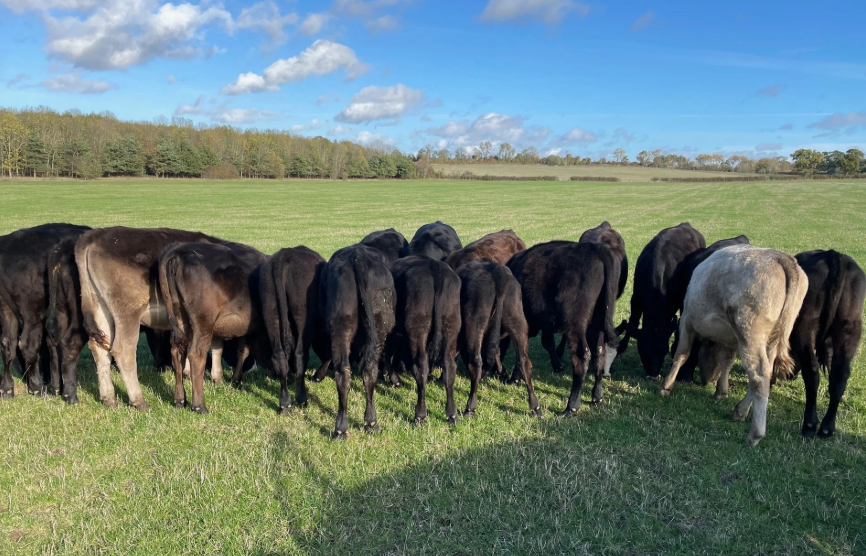
Choosing beef is easier when the label leads to a useful conversation. Grass-fed and grain-finished describe aspects of how cattle are fed; they are not complete descriptions of an animal's life or a promise about every steak. Here is a practical guide to reading those terms, understanding the evidence and deciding what to ask before filling your freezer.
Start with the whole feeding history
Many cattle spend part of their lives eating grass or other forage. A finishing diet describes what an animal is fed towards the end of production, so a grain-finished animal may also have grazed earlier. Forage includes conserved feeds such as hay and grass silage, as well as grazed plants. Winter housing does not, by itself, tell you whether the feed is forage or cereal-based.
Grass-fed wording should prompt a follow-up question: does the producer mean some grass in the diet, or forage-only rearing and finishing? Ask whether grain or concentrate feeds were used, when and for how long. A photograph of cattle in a field cannot establish those details.
The Pasture for Life feeding FAQs explain the organisation's lifetime pasture-and-forage approach and why this differs from a general grass-fed description. That link is an independent explanation of a standard, not a claim that our business or products are certified under it.
Grass-fed, grass-finished and organic are different questions
A forage-only finishing approach concerns feed. Organic production concerns a wider production standard, and the two descriptions should not be treated as interchangeable. Neither a native breed name nor a pastoral image establishes certification. Ask for the applicable certifier, scope and current documentation where an organic claim is made.
The same care applies to antibiotic statements. A feeding label alone cannot tell you an animal's treatment history. Do not assume that grain-finished means antibiotics were used, or that grass-fed means no veterinary treatment was ever needed. Ask the producer about animal-health management and the evidence behind any specific claim.
Our breed guide helps you compare the cattle names you may encounter, while the processing and traceability guide explains the questions to raise about the journey to a finished cut.
How the two approaches can differ
Grass and forage finishing
Here the useful question is whether the animal was both reared and finished on forage. Grazing conditions, conserved forage, season, breed and the management of the individual animal all matter. Ask what was actually fed rather than assuming every pasture-based system is identical.
Grain or concentrate finishing
Here the diet includes grain or other concentrate feeds during finishing. The proportion, ingredients and length of finishing can differ. It is not accurate to describe every grain-finished animal as having spent its whole life confined in a feedlot, particularly when applying international illustrations to British production.
Growth, flavour and texture
A diagram may present one system as always faster-growing, buttery and tender and the other as always leaner, firmer or gamey. Those are too certain as descriptions of an individual product. Ask about the particular animal, cut, maturation and preparation instead. Treat tasting descriptions as a guide to preferences, not a guarantee from the feed label.
If you enjoy richly marbled cuts, discuss the individual British Wagyu or cross share. If you want a versatile collection for everyday cooking, compare the Angus and Hereford options. The breed name still needs to be backed by the actual product specification.
What does the nutrition research show?
Feed can influence the fatty-acid composition of meat, but a change in composition is not the same as proof of a health benefit. One randomised study by McAfee and colleagues followed 20 healthy people for four weeks while they ate beef and lamb from animals finished on grass or concentrate. The grass group had higher levels of certain omega-3 fatty acids in blood measurements. The study did not find significant differences between groups in cholesterol or blood pressure.
That is a useful observation with clear limits: it was small, short and included both beef and lamb. It does not establish that buying a particular box of beef will prevent disease or produce the same result. Nor does it support promises of improved brain health, immunity, metabolism or fat loss from our products.
Our practical approach is to give you product information you can check, rather than attach health promises to a feeding label. Look at the actual cut and available nutrition information, and consider how it fits into the food you eat over time.
The NHS guide to meat in your diet discusses meat alongside other protein foods, choosing leaner cuts and managing red and processed meat intake. It is a more useful reference for everyday dietary decisions than a simple good-versus-bad comparison image.
Turn the information into a better buying conversation
Before choosing a quarter, half or whole share, make a short list of what matters to your household. Are you looking for a specific feeding history? Do you cook more stews than steaks? Would smaller roasting joints suit you better? Clear answers help the butcher explain which confirmed specification is a good fit.
- Ask which farm and animal or batch the meat comes from, and which records support the stated breed and feeding history.
- Ask whether the quoted take-home weight includes bone, which cuts are guaranteed and how substitutions are agreed.
- Confirm the final price, packaging, delivery area and proposed date before making a commitment.
- Discuss portion sizes and how much clear, usable freezer space you actually have.
Our beef-share comparison brings the indicative breed and share ranges together. Start with the quarter-share guide for a smaller allocation, or read how to buy a half cow for a more substantial order. The freezer-space calculator is a planning tool; check its estimate against the confirmed packing plan.
A note about our own product claims
Farm To Table Beef is based in St Clement, near Truro, Cornwall. This article explains terminology and buying questions; it is not verification of every product's rearing or finishing method. Any specific organic, forage-only, ageing or other production claim needs evidence for the individual product before it is published as an offer.
Explore the farm gallery for the photographs shared with us, and contact us to discuss sourcing, cuts or availability. Orders remain enquiries while paid checkout is being developed; an enquiry is not a confirmed delivery booking.